Article 06
A research workflow you can run without a theater budget
tuxklum’s sequence keeps qualitative work honest: clarify the question, recruit for proximity, talk and watch, name friction, synthesize with scope tags. QuickBooks often enters as status quo—plan for that.
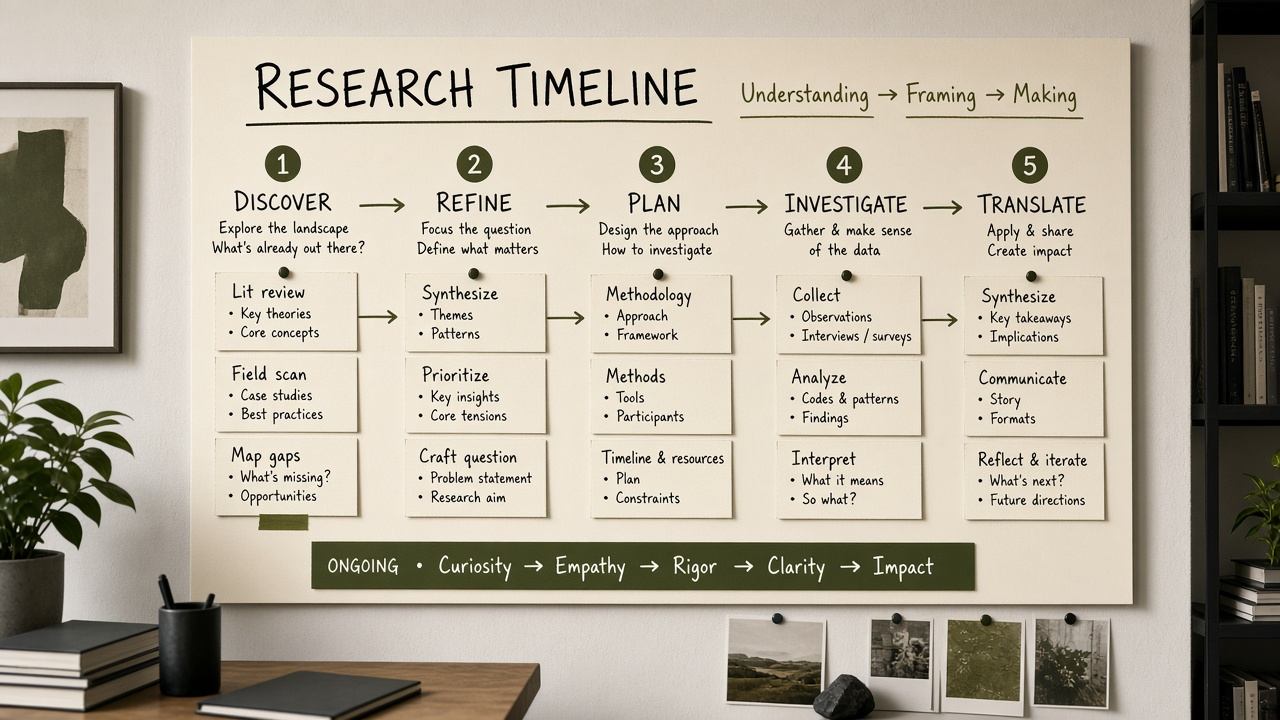
Step 1
Frame a decision question
Not “what do people think of us?” Prefer “what stalls operators who consider leaving QuickBooks for a specialist tool?” Narrow questions produce usable notes.
Step 2
Recruit with proximity
Follow interview methods and decision-maker guidance. Log why each person was included.
Step 3
Collect: talk + watch
Run interviews and schedule observation windows using touchpoint observation. Same codebook across both.
Step 4
Pattern friction
Cluster stalls with the friction library. Separate useful caution from accidental confusion.
Step 5
Synthesize & hand off
Write scoped positioning via positioning synthesis. Attach receipts. Refuse ROI guarantees.
Cadence that keeps quality high
Weekly
2–4 interviews or observation sessions; same-day notes.
Biweekly
Pattern review; update friction and QuickBooks status-quo tags.
Monthly
Positioning check; kill unsupported claims.
For writing standards that survive skeptical readers, continue to qualitative insight practice.